



Air Pollution India

Air Pollution in India Ask, Aware, Act.

1plant ! Indiapollution.com
1 Plant₹ 99Planting Now
2plant ! Indiapollution.com
2 Plants₹ 199Planting Now
3plant ! Indiapollution.com
3 Plants₹ 299Planting Now

Frequently Asked Questions

Key Findings (World Air Quality Report 2024 – Updated for 2026):

India ranks 5th most polluted country globally in 2024, improving from 3rd in 2023. New Delhi remains the world’s most polluted capital, with an average PM2.5 level around 90 µg/m³, nearly 10 times higher than WHO limits. Air pollution mainly comes from vehicles, dust, industries, and crop burning

India’s air pollution remains severe, with average PM2.5 levels about 10 times higher than the World Health Organization’s annual safety guideline.

Industrial activity is one of the biggest sources of air pollution in India, contributing about 51% of the country’s total pollution. Emissions like sulfur dioxide and nitrogen oxide from factories and thermal power plants cause respiratory problems and contribute to acid rain.

Delhi continues to top the pollution chart, with ITO recording an AQI of 373 and Mundka at 363 — both in the “very poor” category that can harm even healthy people. Anand Vihar also ranked among the worst-affected areas with an AQI of 352, according to CPCB data.

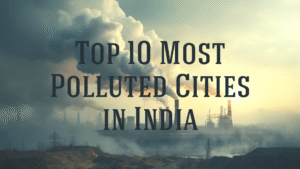
Top 10 Most Polluted Cities in India (2025–2026)

1. Byrnihat, Meghalaya – PM2.5: 128.2 µg/m³

2. Delhi – PM2.5: 108.3 µg/m³

3. Mullanpur, Punjab – PM2.5: 102.3 µg/m³

4. Faridabad, Haryana – PM2.5: 101.2 µg/m³

5. Loni, Uttar Pradesh – PM2.5: 91.7 µg/m³

6. New Delhi – PM2.5: 91.6 µg/m³

7. Gurugram, Haryana – PM2.5: 87.4 µg/m³

8. Ganganagar, Rajasthan – PM2.5: 86.6 µg/m³

9. Greater Noida, Uttar Pradesh – PM2.5: 83.5 µg/m³

10. Bhiwadi, Rajasthan – PM2.5: 83.1 µg/m³

Answer:Byrnihat in Meghalaya is currently the most polluted city in India, followed by Delhi and Mullanpur.

Air pollution causes around 7.9 million premature deaths every year, making it deadlier than tobacco worldwide. About 99% of the global population breathes air that exceeds the World Health Organization’s safe limits, according to the State of Global Air report.

Real-time India cleanest city ranking

Cities AQI⁺ US

1 Guwahati 97

2 Titagarh 102

3 Bhilai 103

4 Pune 103

Yes. India pollutes more than the USA in terms of air quality. India’s average PM2.5 level is about 10 times higher than the WHO limit, while the USA’s average is only around 2 to 3 times higher. Although the USA emits more greenhouse gases per person, India’s overall air pollution impact is higher because of its large population and industrial activity.

Mizoram has the best air quality in India, followed by Arunachal Pradesh and Nagaland.

As of the latest reports, Bangladesh is the most polluted country in the world, with the highest average PM2.5 levels globally.

The top three causes of air pollution are

1. Industrial emissions Factories, power plants, and industrial units release pollutants like sulfur dioxide and nitrogen oxides.

2. Vehicle emissions Cars, trucks, and other vehicles emit carbon monoxide, nitrogen oxides, and particulate matter.

3. Crop burning and biomass burning Agricultural residue burning and wood/coal burning for fuel release large amounts of smoke and particulate matter.

India’s water is highly polluted due to a combination of factors:

1. Industrial waste Factories discharge untreated chemicals and heavy metals into rivers and lakes.

2. Domestic sewage Large amounts of untreated sewage flow into water bodies.

3. Agricultural runoff Pesticides and fertilizers wash into rivers and groundwater.

4. Plastic and solid waste Improper disposal of trash clogs and contaminates water sources.

5. Poor sanitation infrastructure Many areas lack proper wastewater treatment facilities.

These factors together make India’s water unsafe for drinking and harmful to the environment.

As of recent reports, Indore in Madhya Pradesh is considered the cleanest city in India, consistently ranking top in the  Swachh Survekshan cleanliness survey.

The city with the worst air pollution in India is Byrnihat, Meghalaya, followed closely by Delhi and Mullanpur, Punjab, based on PM2.5 levels.

Uttar Pradesh is the most polluted state in India, with several cities like Loni, Greater Noida, and Kanpur recording extremely high PM2.5 levels.

Top 10 filthiest cities in India according to Swachh Survekshan 2025-2026

1. Madurai

2. Ludhiana

3. Chennai

4. Ranchi

5. Bengaluru

6. Dhanbad

7. Faridabad

8. Greater Mumbai

9. Srinagar

10. Delhi

Countries with the cleanest air are usually small, less industrialized, or with strict environmental regulations. Finland, Iceland, and New Zealand consistently rank among the countries with the cleanest air in the world.

India’s air quality is poor due to multiple factors:

1. Vehicle emissions Rapidly growing traffic releases huge amounts of carbon monoxide, nitrogen oxides, and particulate matter.

2. Industrial pollution Factories, power plants, and industries emit sulfur dioxide, nitrogen oxides, and other pollutants.

3. Crop and biomass burning Burning of agricultural residue and wood adds smoke and fine particles to the air.

4. Construction dust Urban development generates large amounts of dust.

5. Waste burning Open burning of garbage contributes to smog and toxic fumes.

These combined factors make India’s air among the most polluted in the

world.

The term “father of air pollution” is often attributed to Rudolf Christiaan Lintsen, who conducted some of the earliest systematic studies on industrial air pollution. However, in a broader historical context, Robert Angus Smith, a 19th-century Scottish chemist, is more widely recognized for pioneering the study of air pollution and coining the term “acid rain”.

Yes, lungs can recover from air pollution over time, especially if exposure is reduced, though long-term damage may be permanent in severe cases.

The #1 polluter on Earth is China, due to its high levels of industrial activity, coal-based energy production, and greenhouse gas emissions.

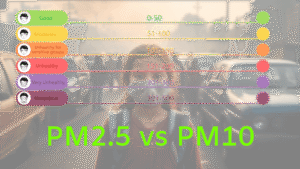
In India, an Air Quality Index (AQI) of 0–50 is considered good and safe for all individuals. Levels above this indicate increasing health risks:

51–100: Moderate

101–200: Unhealthy for sensitive groups

201–300: Unhealthy

301–400: Very unhealthy

401–500: Haza

rdous

Indore in Madhya Pradesh has been ranked the cleanest city in India seven times in the Swachh Survekshan survey.

Cities like Bengaluru, Pune, and Hyderabad are often considered the best to live in India due to a balance of job opportunities, infrastructure, education, healthcare, and quality of life.

Elon Musk’s personal carbon footprint is estimated to be around 20,000 to 30,000 tons of CO₂ per year, primarily due to his private jet travel and large lifestyle, making it significantly higher than the average individual.

India is among the most polluted countries, but not the absolute worst; cities like Delhi, Ghaziabad, and Varanasi often rank very high in pollution globally.

Uttar Pradesh has the worst air quality in India, with cities like Ghaziabad and Lucknow often topping pollution charts.

Yes, air purifiers can improve indoor air quality by removing dust, smoke, and pollutants, but they don’t reduce outdoor pollution.

Most polluted US cities: Los Angeles, Bakersfield, Houston, Fresno, New York City.

Cities in the US with the cleanest air often include Cheyenne (Wyoming), Honolulu (Hawaii), and Bismarck (North Dakota).

Hawaii is considered the best US state for lungs due to clean air, low pollution, and plenty of greenery.

Give clear, concise answers with headings, lists, and SEO-friendly content.

Indian cities using electric buses include Delhi, Bengaluru, Hyderabad, Ahmedabad, and Mumbai.

Green belts are moderately effective in improving city air quality: they trap dust and pollutants, reduce smog, lower temperatures, and act as barriers against traffic and industrial emissions, but they cannot fully replace pollution control measures.

Yes, AI and data analytics can predict pollution spikes by analyzing historical AQI data, weather patterns, traffic, and industrial activity, helping cities take preemptive action to reduce exposure.

Adopting renewable energy in India can significantly reduce PM2.5 levels—studies suggest replacing coal with solar, wind, or hydro can cut urban PM2.5 by 10–30%, depending on city size and energy mix.

IoT monitors industrial emissions by using connected sensors on factories to track pollutants like PM2.5, NO₂, and SO₂ in real time, sending data to central systems** for analysis, alerts, and regulatory compliance.

Drone-based sensors are used to fly over urban or industrial areas to measure PM2.5, PM10, and gases at different altitudes, providing detailed, real-time pollution maps that fixed stations cannot capture.

Indoor air sensors measure pollutants inside homes, offices, or buildings (like PM2.5, CO, VOCs) to improve indoor air quality.

Outdoor air sensors measure ambient air pollution in cities or regions (PM2.5, PM10, NO₂, SO₂, O₃) to track overall environmental air quality.

Data analytics platforms help governments by processing air quality data from sensors and satellites, identifying pollution hotspots and trends, predicting future spikes, and guiding policy decisions, traffic management, and industrial regulations.

In India, national air quality databases are maintained by:

Central Pollution Control Board (CPCB) – Main national agency for AQI data.

State Pollution Control Boards (SPCBs) – Collect and report regional data.

Indian Institute of Tropical Meteorology (IITM)– Provides satellite and modeling data for air quality.

India Meteorological Department (IMD) – Supports weather-related pollution analysis.

Electric vehicles can reduce urban air pollution by 20–40% depending on adoption rate, as they eliminate tailpipe emissions of PM2.5, NO₂, and CO from petrol and diesel vehicles.

BS6 (Bharat Stage 6) are strict vehicle emission standards in India that limit pollutants like NOx, PM, and CO. They help by reducing harmful exhaust emissions, improving urban air quality, and aligning with global Euro 6 norms.

Upgrading public transport (metros, buses) reduces the number of private vehicles on roads, cutting tailpipe emissions of PM2.5, NO₂, and CO, and therefore improves urban AQI.

Industrial air filters and scrubbers capture dust, smoke, and harmful gases before they enter the atmosphere, reducing PM2.5, PM10, SO₂, and NOx emissions and improving nearby urban air quality.

Yes, India has several clean cities. Indore, Surat, Navi Mumbai, and Mysuru are consistently ranked among the cleanest cities in the country according to the Swachh Survekshan survey.

Yes, India is currently the third-largest emitter of carbon dioxide (CO₂) in the world, after China and the USA, mainly due to its reliance on coal, industrial activity, and growing energy demand.

Cities like Bengaluru, Pune, and Jaipur are often considered the nicest cities in India due to their pleasant climate, good infrastructure, lifestyle options, and cultural attractions.

The #1 cleanest city in the world is often cited as Helsinki, Finland, known for its low pollution levels, strict environmental regulations, and abundant green spaces.

The Ganga (Ganges) in Uttarakhand, especially the stretch near Rishikesh and Devprayag, is considered one of the cleanest rivers in India due to ongoing clean-up and conservation efforts. Other relatively clean rivers include Mandovi in Goa and Bharathapuzha in Kerala.

India’s air pollution is high due to vehicle emissions, industrial smoke, crop burning, construction dust, and open garbage burning

The dirtiest city in India is Madurai, according to the latest Swachh Survekshan rankings.

Countries with the worst air quality include Bangladesh, Pakistan, India, Nepal, and China, primarily due to industrial emissions, vehicle pollution, and biomass burning.

The biggest pollution problem in India is air pollution, caused by vehicle emissions, industrial smoke, crop burning, construction dust, and waste burning, leading to severe health and environmental impacts.

Mizoram is considered the least polluted state in India, with very low air and water pollution levels compared to other states.

Air pollution is the presence of harmful substances in the air that make it unsafe to breathe.

In one dataset from Jan 2025-2026, among 234 major cities:

~50% had “Moderate” air quality (AQI 101–200)

~11% “Satisfactory”

~14% “Poor” (AQI 201–300)

~1% “Very Poor” (AQI 301–400) 

India’s air pollution is high because of several major reasons:

1. Vehicle emissions– Millions of old and poorly maintained vehicles release harmful gases.

2. Industrial smoke – Factories and power plants burn coal and release pollutants.

3. Crop burning– Farmers burn crop waste, especially in Punjab and Haryana.

4. Construction dust – Rapid urbanization creates heavy dust in cities.

5. Household fuels – Many homes still use wood, coal, or dung for cooking.

6. Population density – More people means more vehicles, waste, and energy use.

Short summary: Too many vehicles, factories, crop burning, and dust make India’s air very p

olluted.

India’s air pollution is improving slightly overall, but many major cities like Delhi are still getting worse or staying very poor.

India is reducing air pollution through the National Clean Air Programme (NCAP), stricter vehicle rules, promoting renewable energy, controlling dust and waste burning, and improving air quality monitoring.

India’s average PM2.5 level is around 50 µg/m³, which is 10 times higher than the WHO safe limit.

In India, air pollution is mostly caused by vehicles, factories, crop burning, dust, and household fuels

Air pollution in India is measured using the Air Quality Index (AQI), which tracks pollutants like PM2.5, PM10, NO₂, SO₂, CO, and O₃.

Use clean vehicles, renewable energy, stop crop burning, control dust, and switch to clean cooking fuels.

Air pollution in India affects daily life by causing breathing problems, allergies, eye irritation, fatigue, and forcing people to wear masks, use air purifiers, or stay indoors on bad air days.

Use public transport, plant trees, avoid burning waste, use clean fuels, and save energy.

India’s cities are extremely polluted, crop burning spreads pollution, and most areas exceed safe air limits.

The biggest contributor in Indian cities is vehicle emissions, especially from old and poorly maintained vehicles.

Use sensors, electric vehicles, clean industries, and smart city planning.

The government should enforce pollution laws, promote clean energy, regulate vehicles and industries, fund monitoring systems, and run awareness campaigns.

Air quality in India worsens in winter due to cold weather, crop burning, and stagnant air, and improves in monsoon when rain clears pollutants.

Some grassroots movements in India include:

Tree plantation drives by local communities and NGOs.

No‑burn campaigns to stop crop residue burning.

Clean‑up drives in cities and rivers.

Cycling and car‑free day initiatives to reduce vehicle pollution.

Short version: Plant trees, stop crop burning, clean cities, promote cycling.

Air quality in my city is better than some northern cities like Delhi but still not fully clean, especially during winter.

Here are the main apps for real-time AQI in India:

CPCB Sameer – Official app from the Central Pollution Control Board.

AQI (Air Quality Index) – Shows real-time AQI and pollutant details.

IQAir AirVisual – Global app covering Indian cities.

Satellites track pollution by measuring air pollutants like PM2.5, NO₂, and SO₂ from space, mapping their distribution across states, monitoring dust, smoke, and smog, and helping predict pollution trends for policy and public alerts.

Low-cost sensors help rural areas by measuring PM2.5, PM10, and other pollutants affordably, providing real-time data, raising awareness, and enabling local authorities to take action without expensive monitoring stations.

Citizens can improve air quality most by:

Using public transport, cycling, or carpooling instead of private vehicles.

Avoiding burning waste or crop residue.

Planting trees and maintaining green spaces.

Using clean cooking fuels like LPG or electric stoves.

Conserving energy at home and work.

Short version: Travel smart, avoid burning, plant trees, use clean fuels, save energy.

Air quality monitoring stations in India measure pollutants like PM2.5, PM10, NO₂, SO₂, CO, and O₃ using sensors and analyzers, send real-time data to central systems, and help calculate the AQI for cities and regions.

Low-cost AQI sensors are affordable devices that measure pollutants like PM2.5, PM10, and gases. They are less precise than official monitoring stations but useful for real-time, local air-quality awareness, especially in rural or under-monitored areas.

Satellites track PM2.5 and PM10 in India by detecting particulate concentrations from space using sensors, mapping regional pollution patterns, monitoring dust, smoke, and smog, and helping forecast pollution hotspots for authorities and citizens.

AI predicts air pollution spikes by analyzing historical AQI data, weather patterns, traffic, and industrial activity to identify trends and forecast high-pollution periods, enabling cities to take preventive measures.

Carpooling and ride-sharing are moderately effective: they reduce the number of vehicles on roads, lowering traffic emissions and helping decrease PM2.5, NO₂, and CO in cities.

Cycling and walking initiatives reduce reliance on motor vehicles, lowering traffic emissions of PM2.5, NO₂, and CO, and also promote greener, less congested streets, improving urban air quality.

Leading Indian cities in electric bus adoption: Delhi, Bengaluru, Ahmedabad, Hyderabad, Surat.

Hybrid vehicles reduce PM2.5 less effectively than fully electric vehicles because they still use petrol or diesel engines, whereas fully electric vehicles produce zero tailpipe emissions, cutting PM2.5 significantly.

Yes, traffic signal optimization and smart roads reduce vehicle emissions by minimizing idling, stop-and-go traffic, and congestion, which lowers PM2.5, NO₂, and CO in cities.

Fleet electrification in logistics replaces diesel trucks and vans with electric vehicles, reducing tailpipe emissions of PM2.5, NO₂, and CO, which significantly improves urban and industrial-area air quality.

Government incentives like subsidies, tax breaks, and reduced registration fees encourage people and companies to adopt electric vehicles, which cuts tailpipe emissions and helps reduce urban air pollution.

Posts

Pages

Products